








When compared with piston diaphragm version, the crop sprayers centrifugal pump can appear both small and simple, but it’s appearance hides an ability to offer users high filling and spraying rates with minimal maintenance.
Intelligent design features on modern centrifugal pumps allow multiple seasons of use without maintenance, but when the time does come for some remedial work, it is likely that a simple swap of the internal mechanical seal will have the pump performing as new again. With the pump removed from the machine, this task should take less than an hour even for a first attempt.
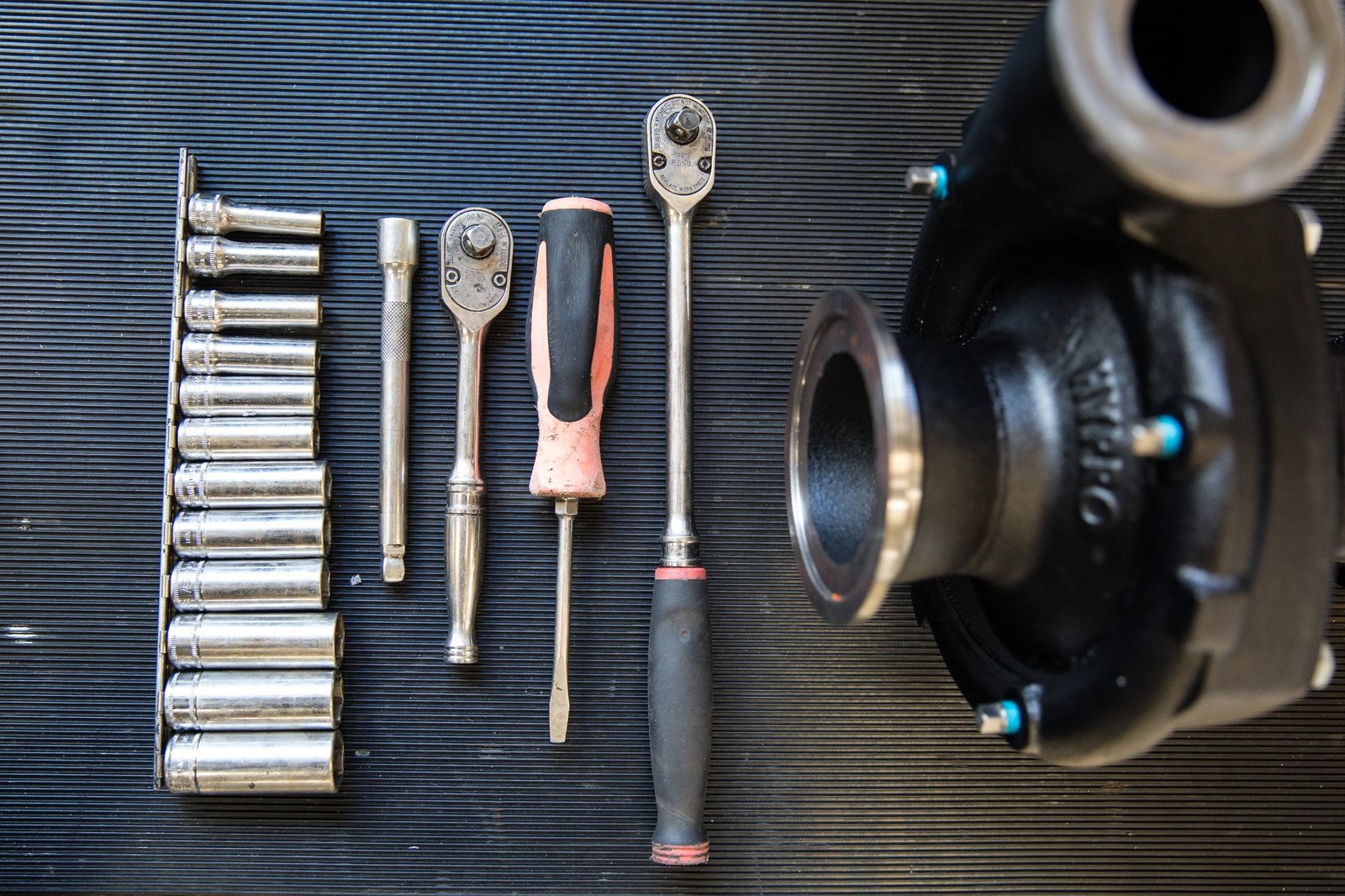
Tools Required
Time Taken
Parts Required
Disassembly
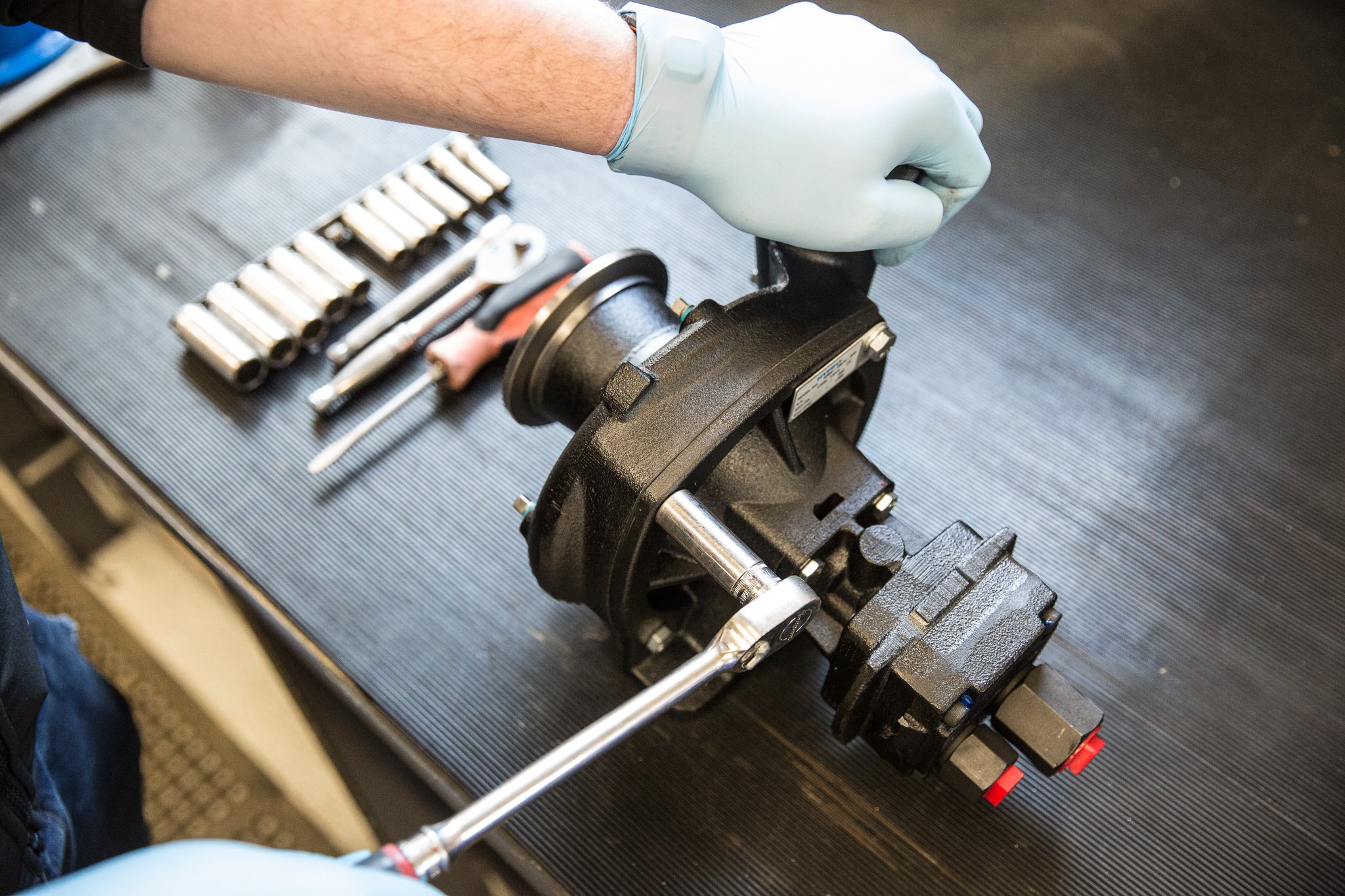
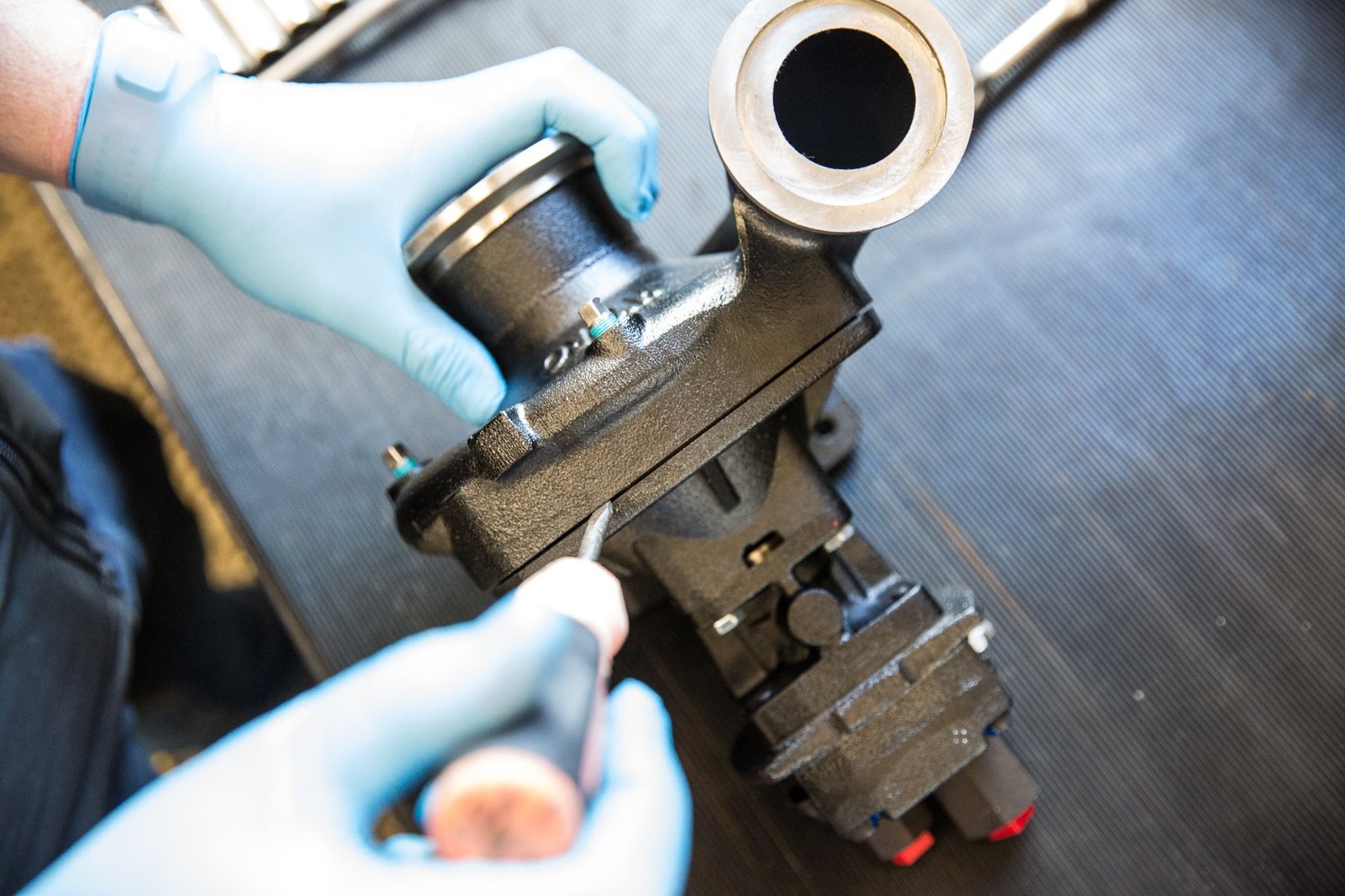
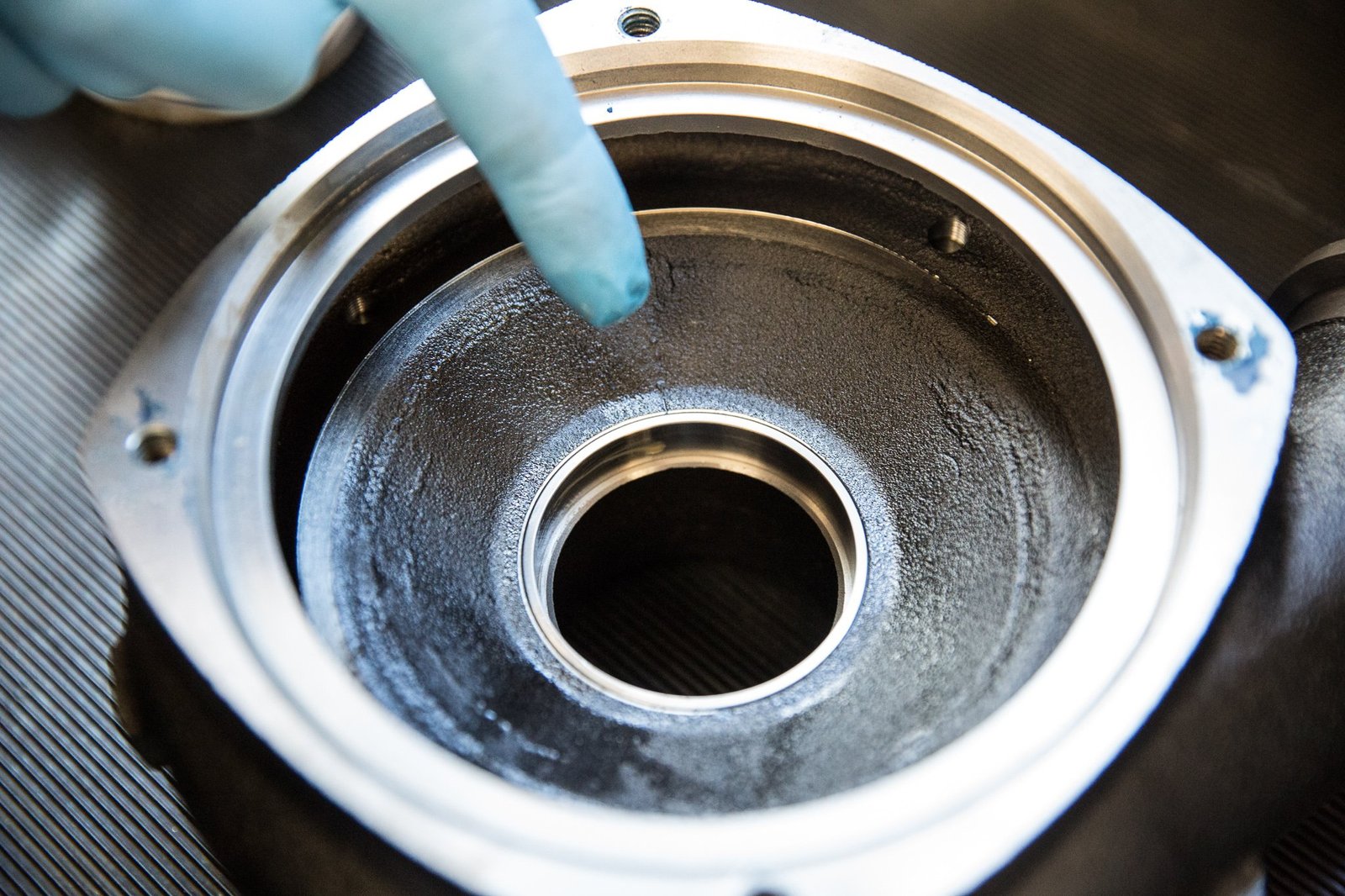
- Remove the four casing cap screws with 9/16” wrench or socket (Image 2). Tap pump casing on discharge port with rubber hammer or use a prying tool in the gap if necessary, to break loose from mounting flange (Image 3). Check inside of pump casing including suction port. If badly corroded, pump casing should be replaced (Image 5). Remove o-ring and discard. O-ring should always be replaced.
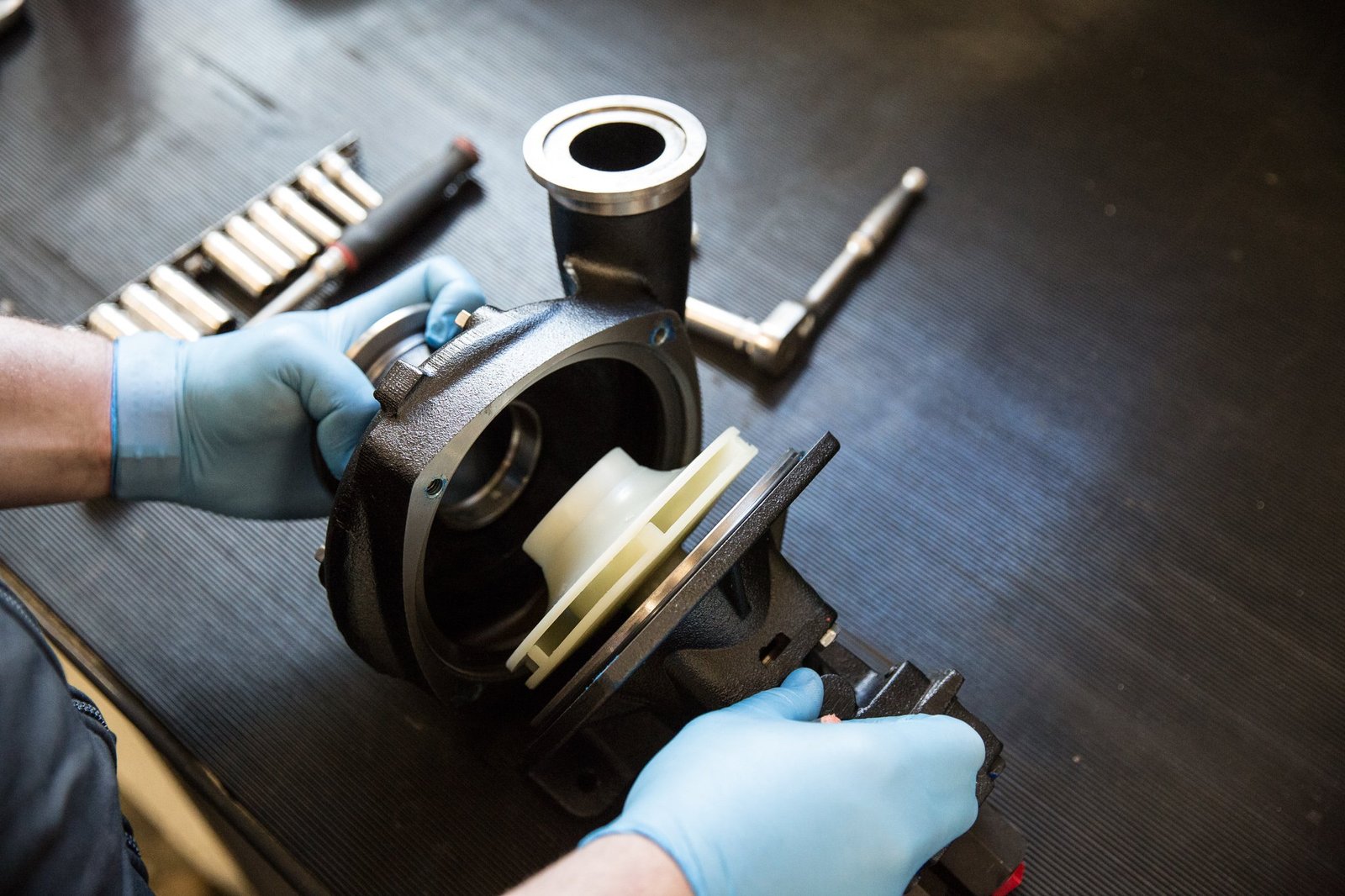
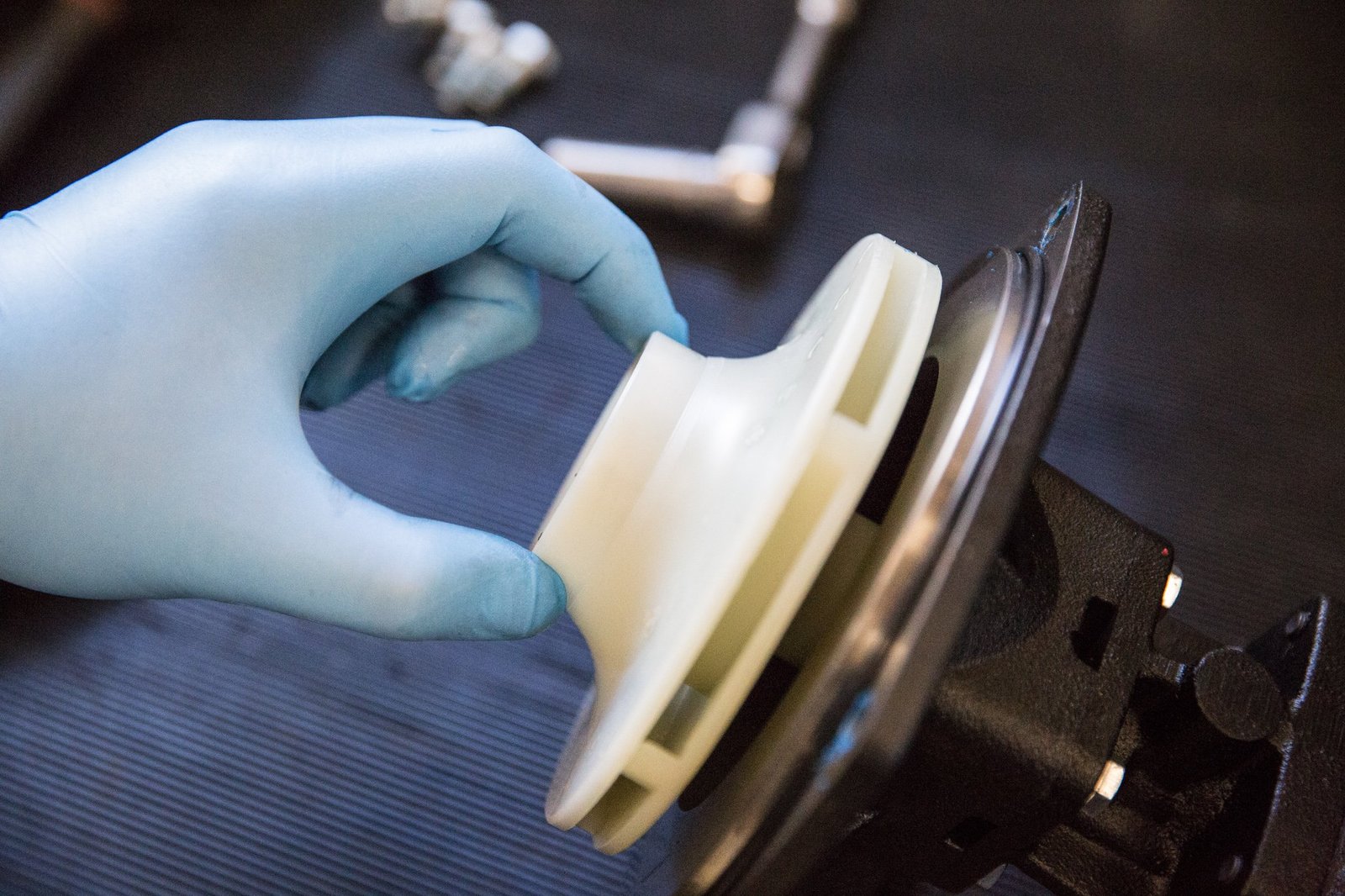
- Check the condition of the impeller where it has been running in the pump housing (Image 6).
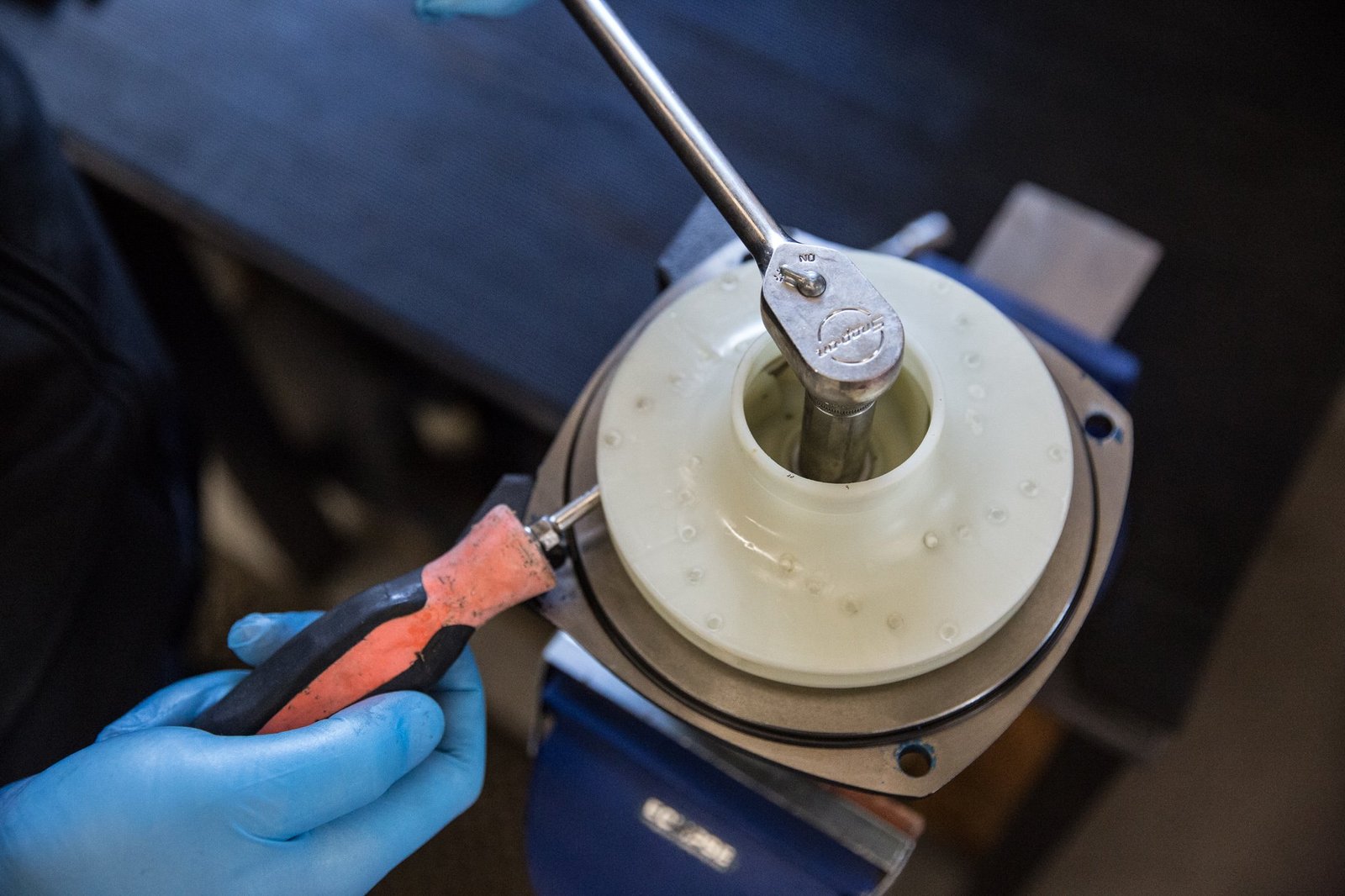
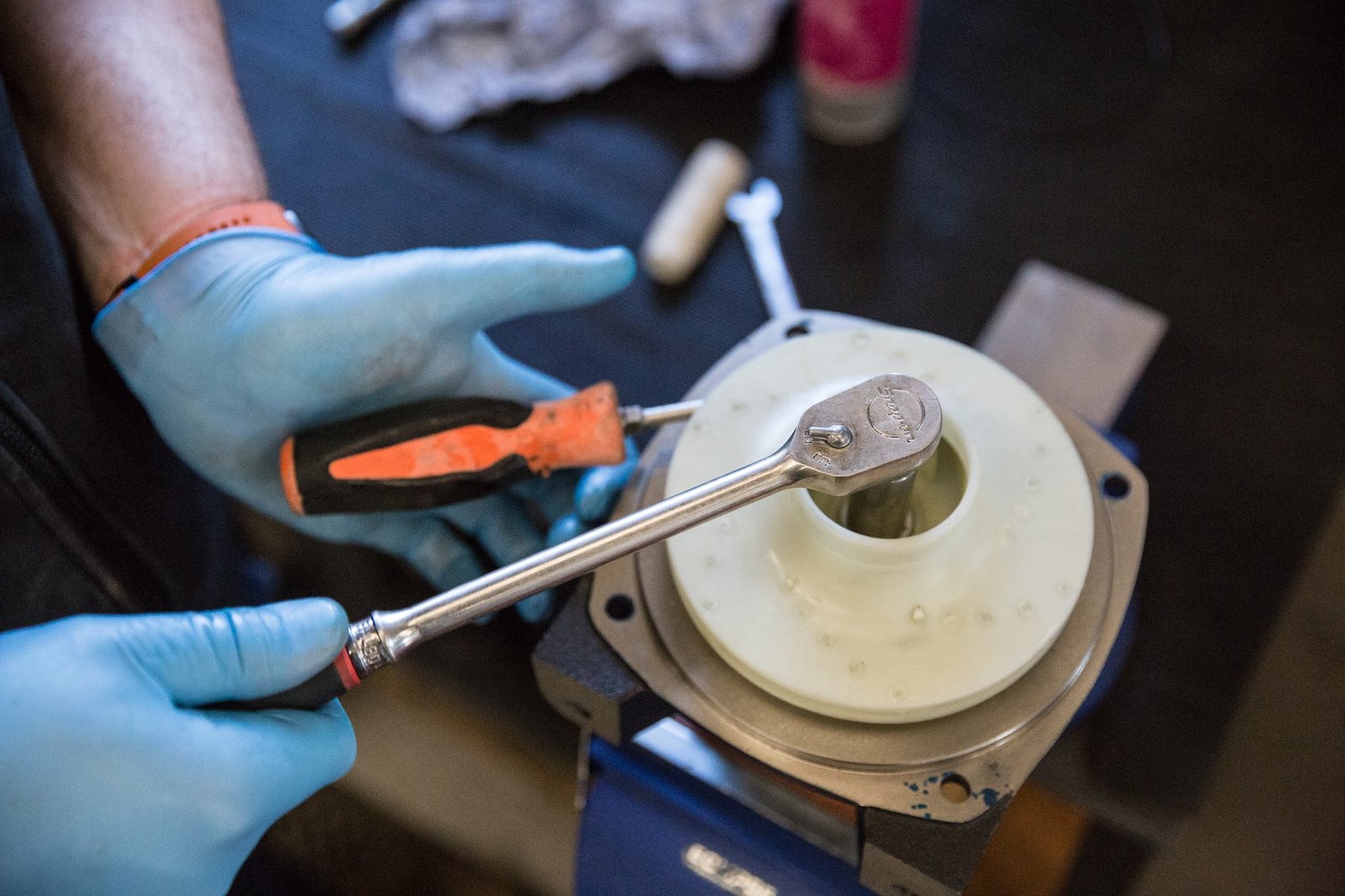
- To remove the impeller nut, clamp the pump in a vice and insert a large screwdriver or file (at least 10” long) into impeller vanes to prevent impeller from turning when loosening nut (Image 7). Use a 5/8” socket wrench to remove the impeller nut by turning it counterclockwise.
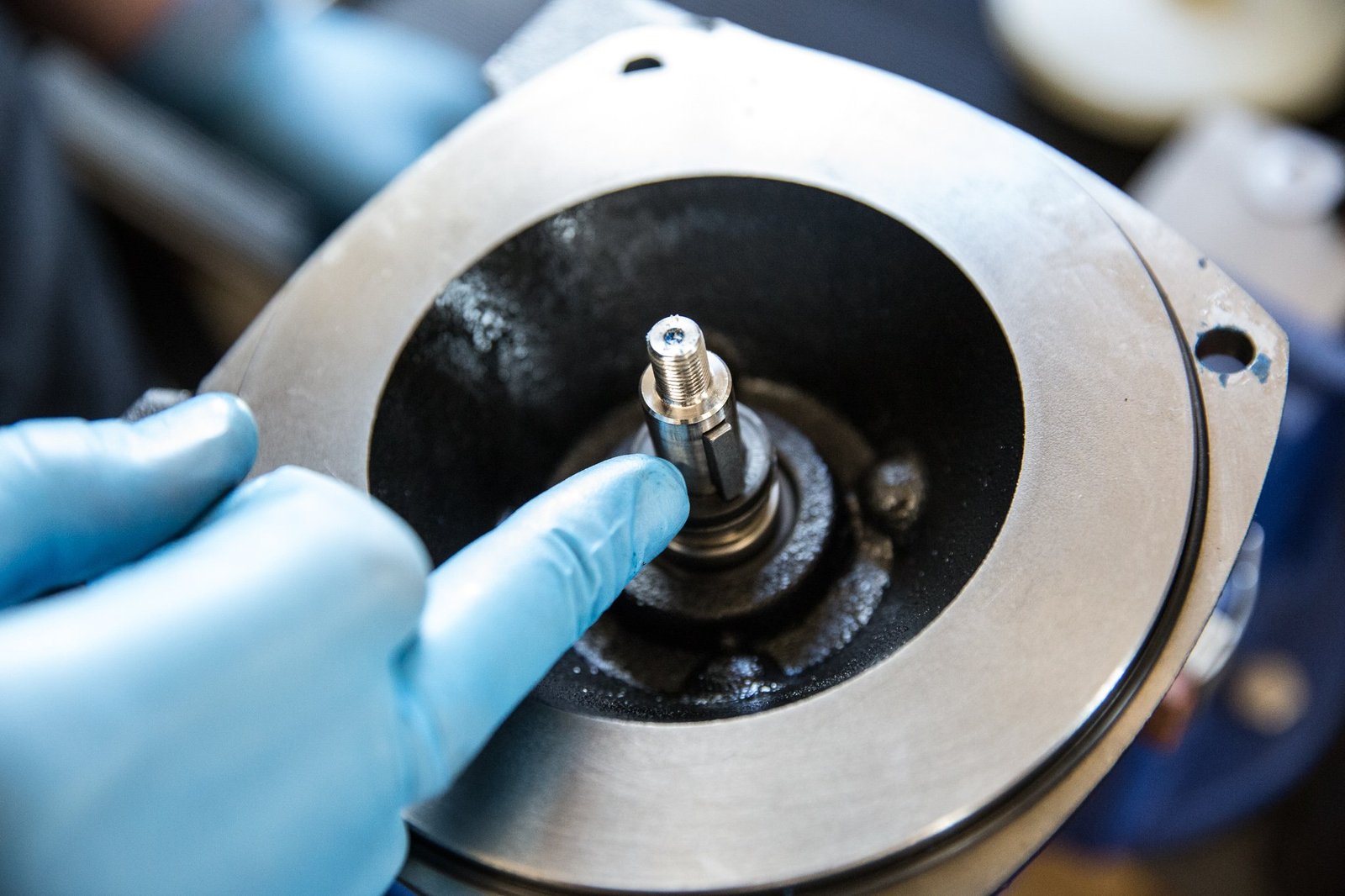
- Once nut and washer are removed, place a screwdriver on each side behind the impeller and pry away from the mounting flange. Remove key from the shaft (Image 8).
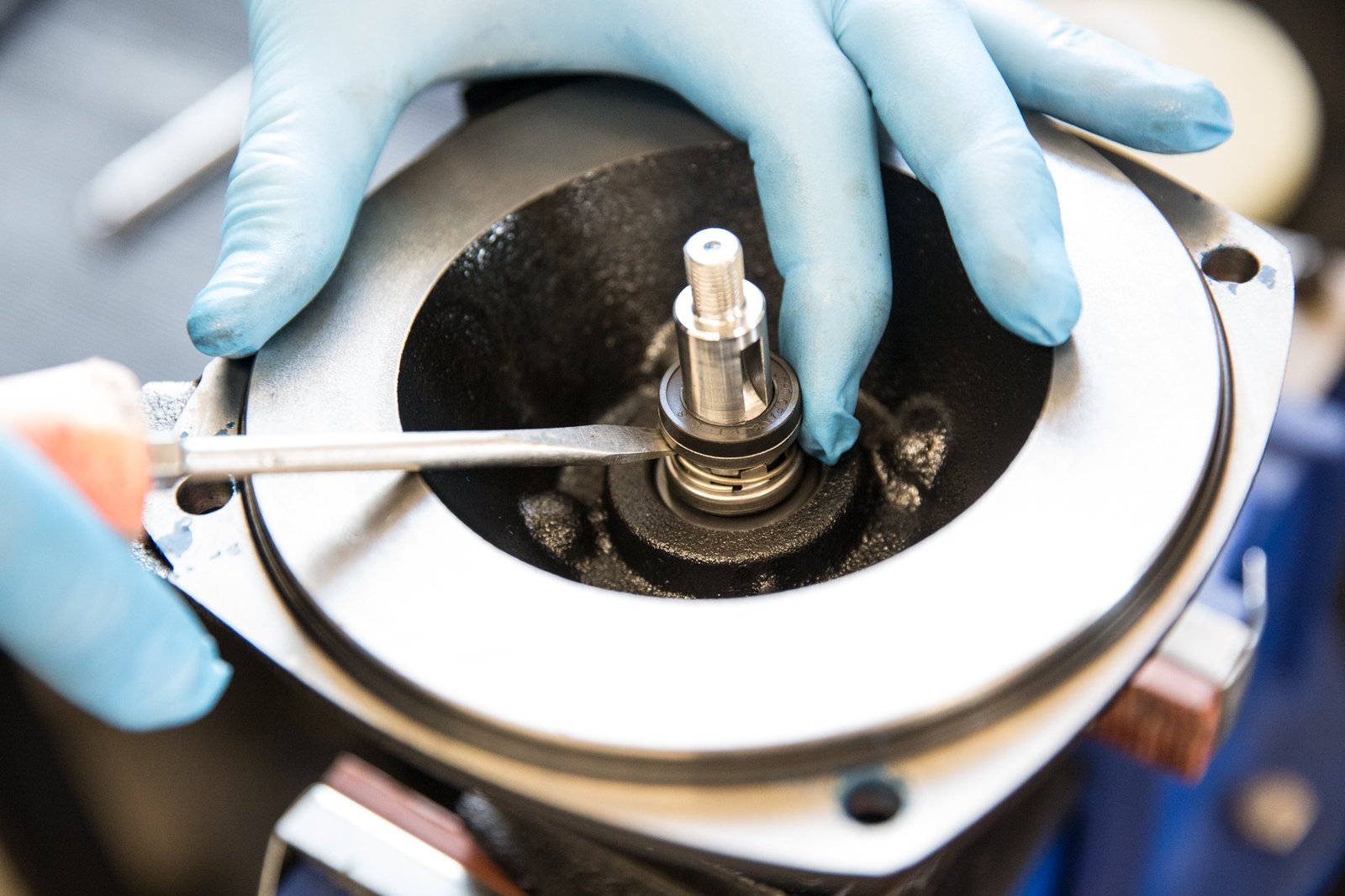
- Using two screwdrivers positioned opposite each other, pry the rotary portion of the seal from the shaft (Image 9).
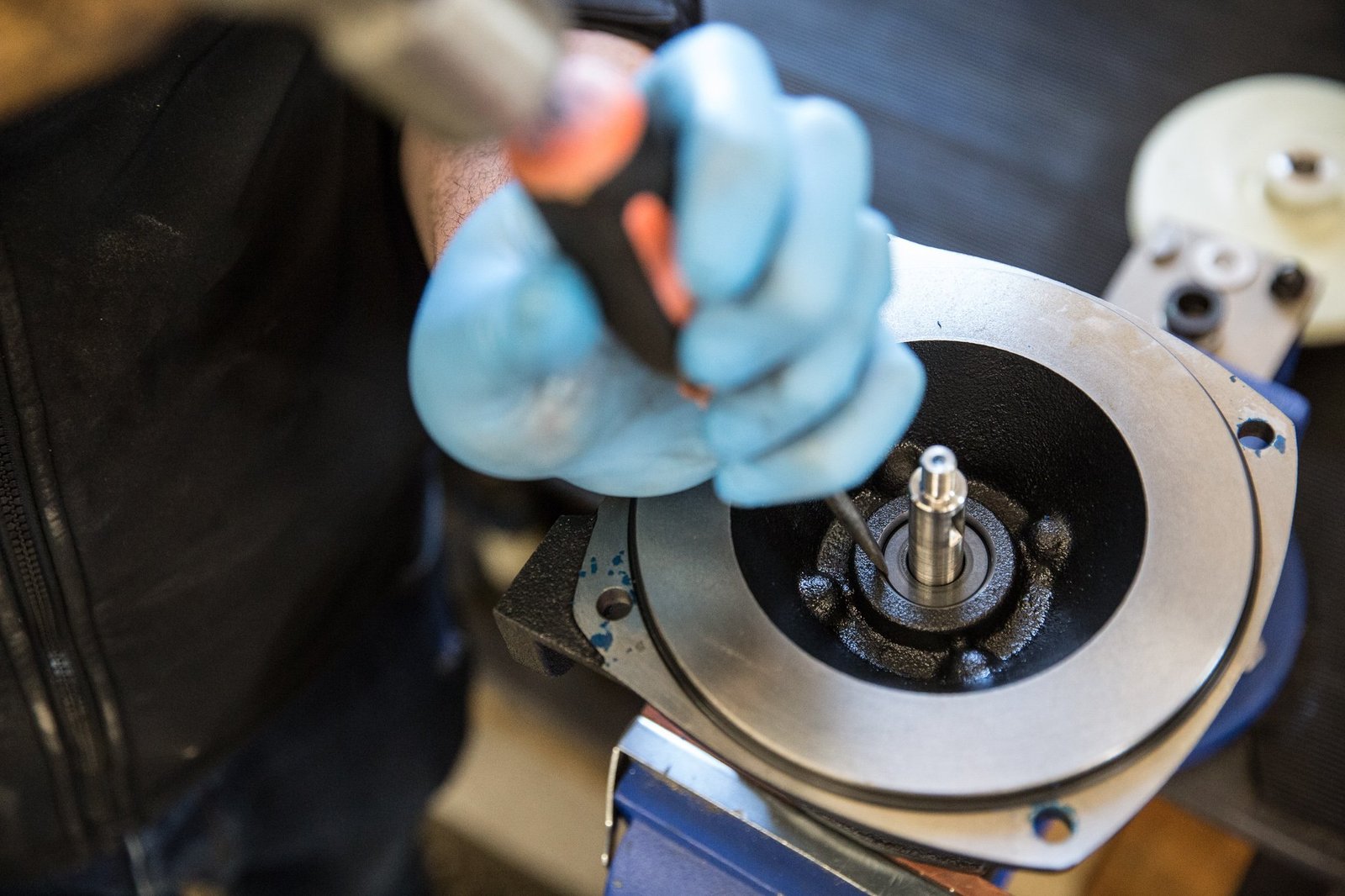
- If the pump is equipped with a silicon carbide seal, it may be necessary to destroy the stationary seal seat with a punch or chisel for removal (Image 10). Silicon carbide material is very brittle and will crack easily. (Caution: The seal will be damaged from removal. A new seal MUST be used when pump is reassembled).
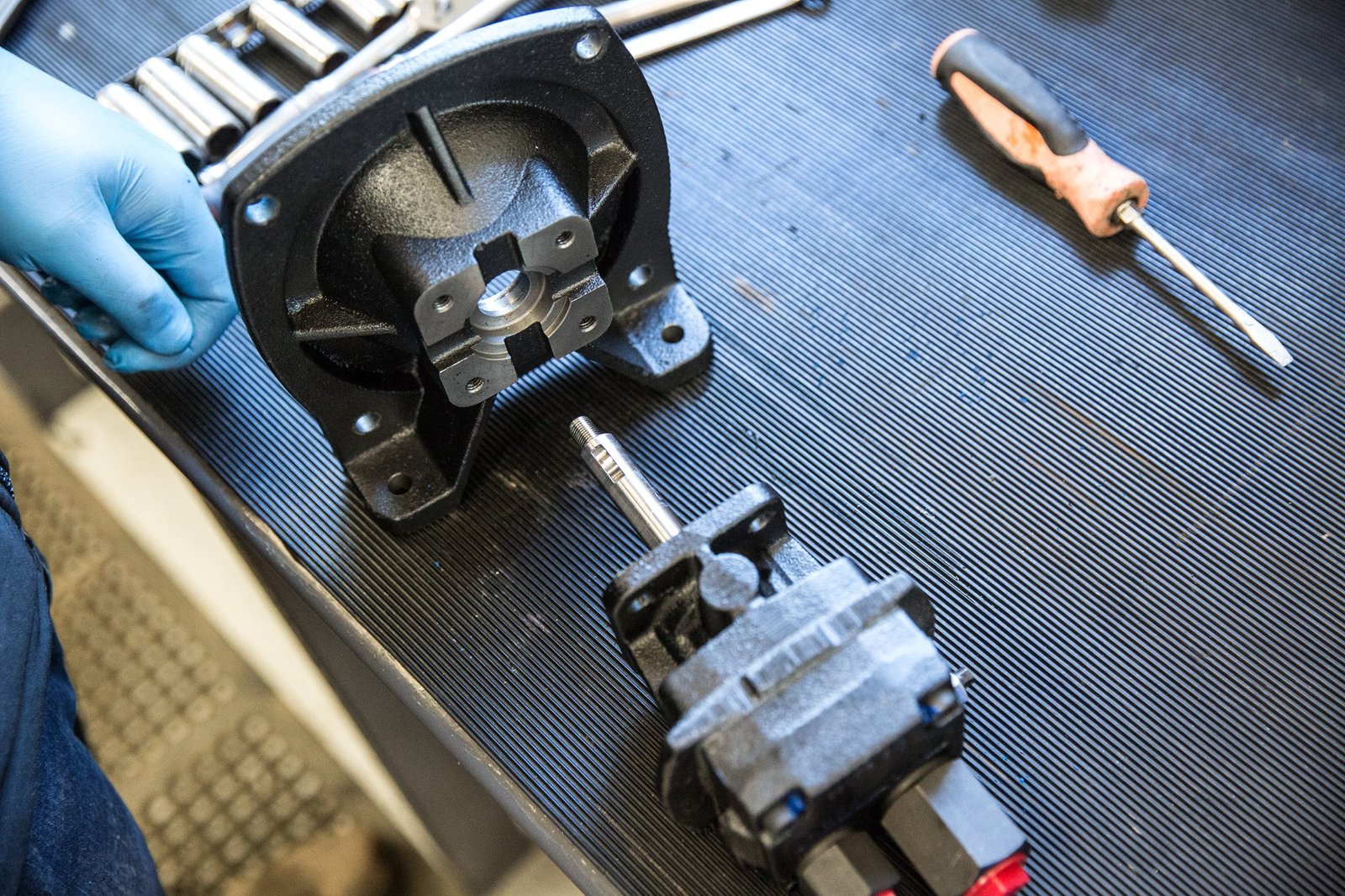
- The seal can also be removed by separating the pump body and hydraulic motor itself (Image 11), this is held in place by 1/2” cap screws and the stationary seal can then be pushed out from the rear. Using this method allows hydraulic motor shaft end play to be checked. This is achieved by attempting to move the shaft in and out.
- Use a circular bottle-type wire brush to clean the pump ports and seal areas. It is also recommended that the pump casing and mounting flange be further cleaned in a solvent tank to remove rust and corrosion particles.



Reassembly
Be extremely careful with the new seal. Silicon carbide material is very hard, but also very brittle. If the seal is accidentally dropped and hits a hard surface, the seal’s primary ring (rotary part) and mating ring (stationary seal seat) can be damaged. Also take precautions not to introduce dirt or grit to the seal surfaces.
- Inspect seal seat cavity to be sure it is clean and without debris. Foreign material at the bottom of the seal seat bore can cause the mating ring to be slightly cocked. The primary ring running on a cocked mating ring at 4500 RPM will chatter and shorten its seal life.
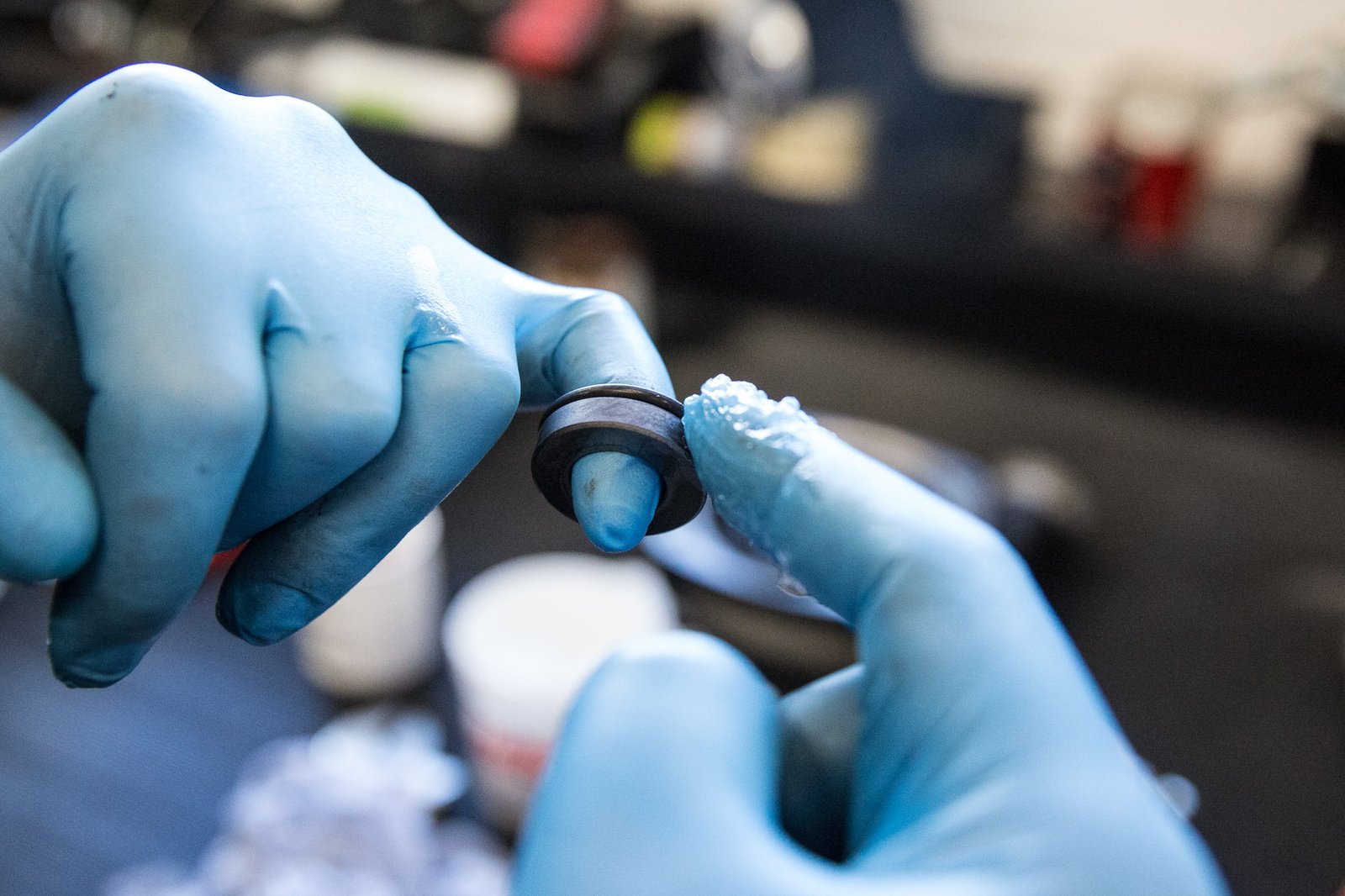
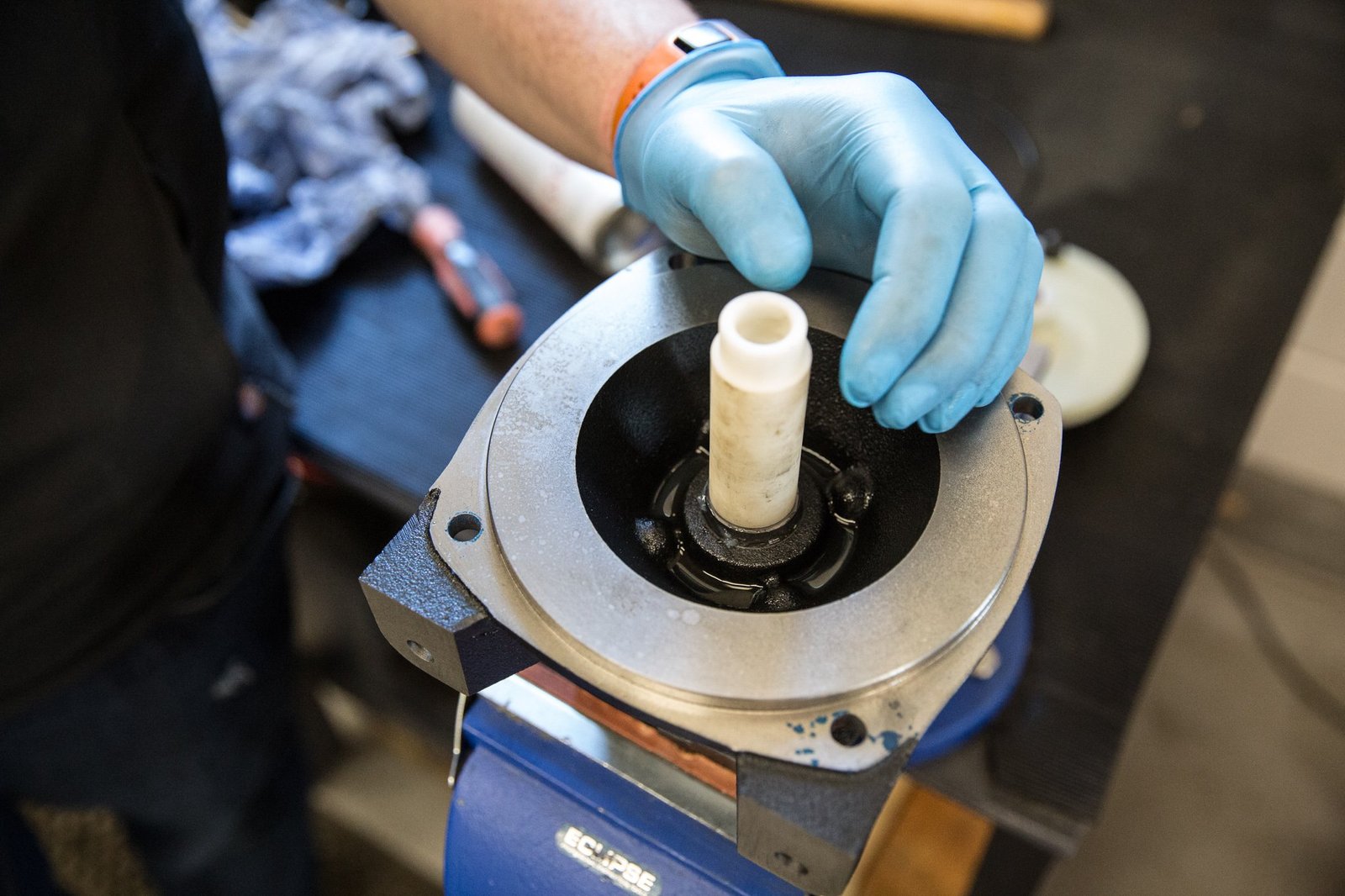
- Lubricate mating ring and seal seat cavity in mounting flange with detergent or lubricant for rubber to aid in smooth installation of mating ring (Image 12). Install mating ring in casting with o-ring face down.
- Press mating ring into seal cavity using a nylon or soft tool using uniform hand force (Image 13). Seal will pop into place and bottom out once o-ring has slipped inside the leading edge of the seal seat cavity.
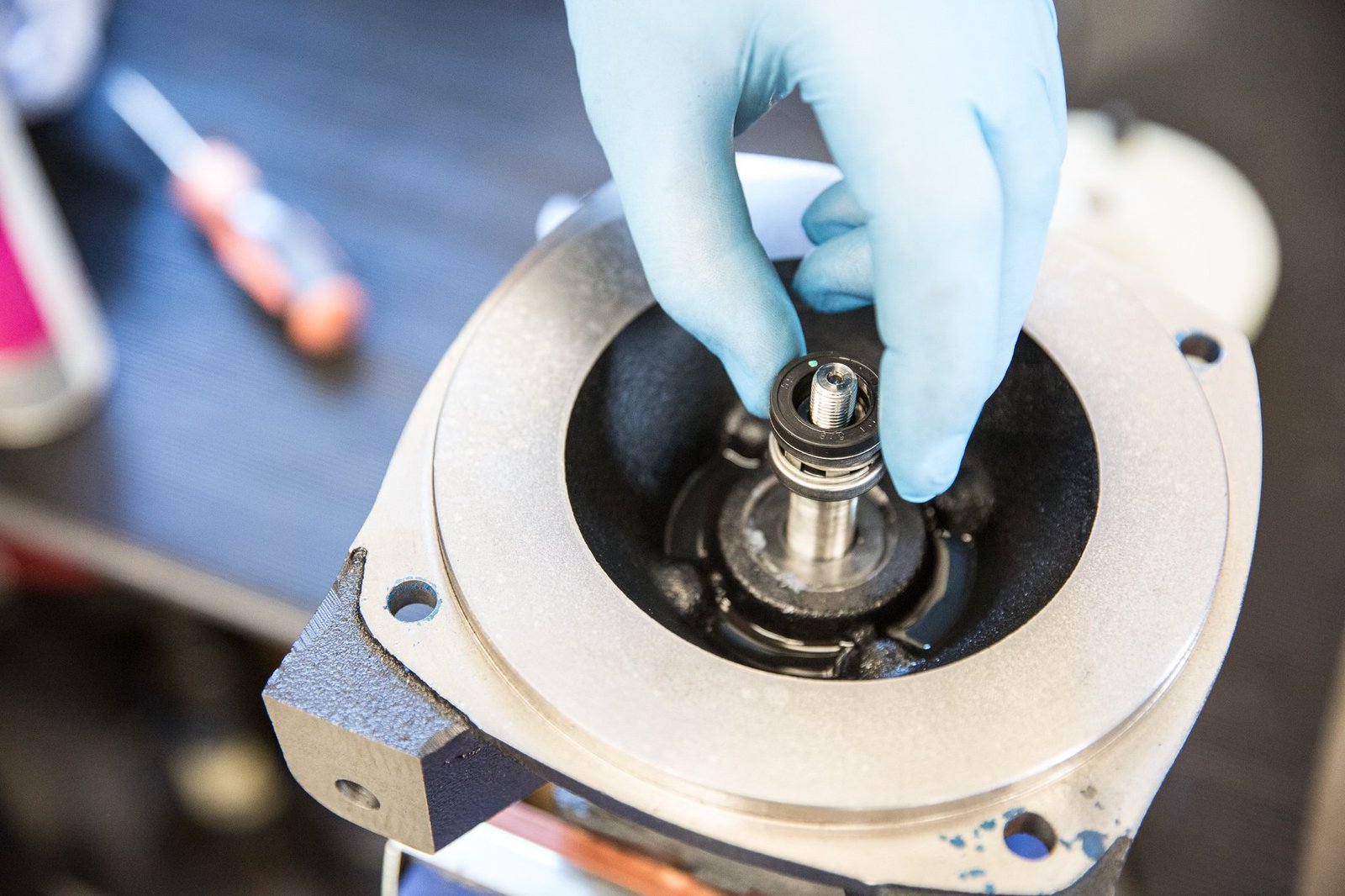
- Next, place head assembly on shaft with primary ring (rotary part) positioned toward the mating ring (Image 14). Slide the head assembly towards the mating ring until it bottoms out against the mating ring. IMPORTANT: Do not lubricate shaft prior to installation of the rotary seal.
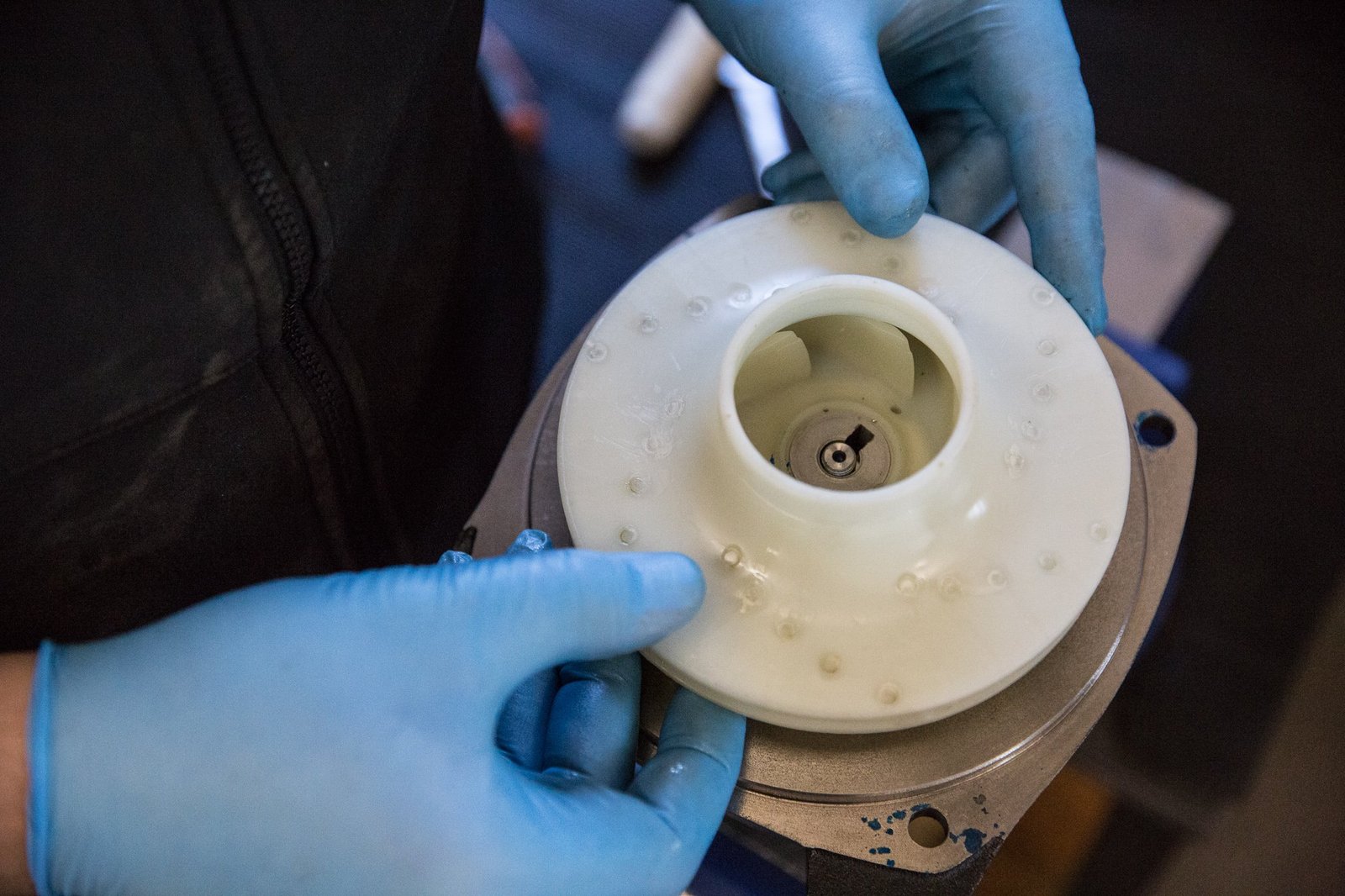
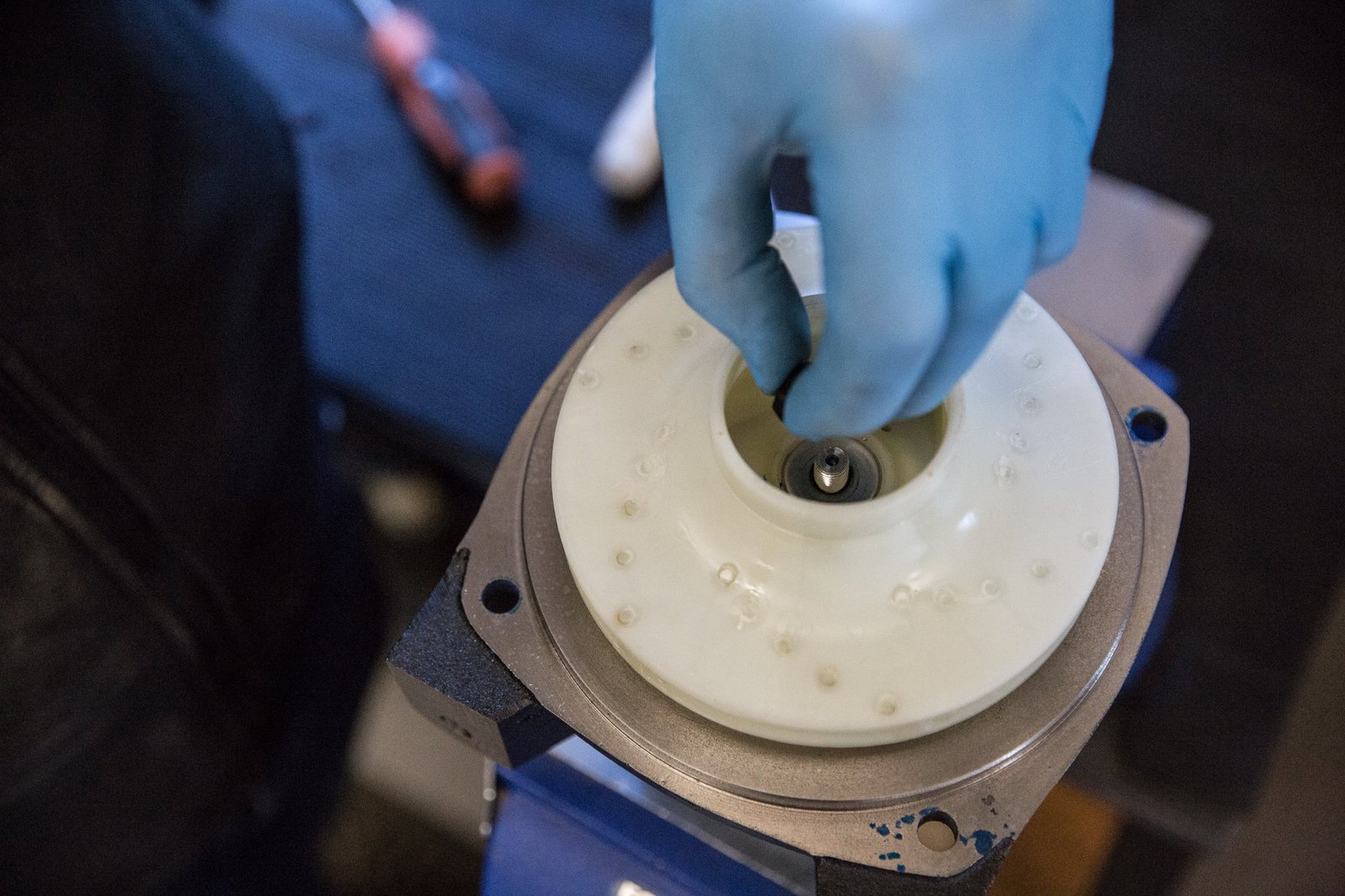
- Insert key into shaft slot (Image 15). Place impeller on shaft. Put impeller acorn nut and washer on shaft end (Image 17), and using a screwdriver or file inserted into impeller vanes for support, tighten impeller nut securely (Image 18).
- Install o-ring on mounting flange (Image 19).
- Place pump casing cover on mounting flange, insert and tighten bolts evenly (Image 20).

