






Pulse Width Modulation

Pressure-based rate control has become the norm on agricultural crop sprayers around the world, however there are some inherent drawbacks with this method of control. By fluctuating the spray pressure to maintain the rate as forward speed changes, droplet size and therefore efficacy and drift characteristics are effected. As a result nozzle choice is a compromise, often with multiple sets required to achieve the operators targets.

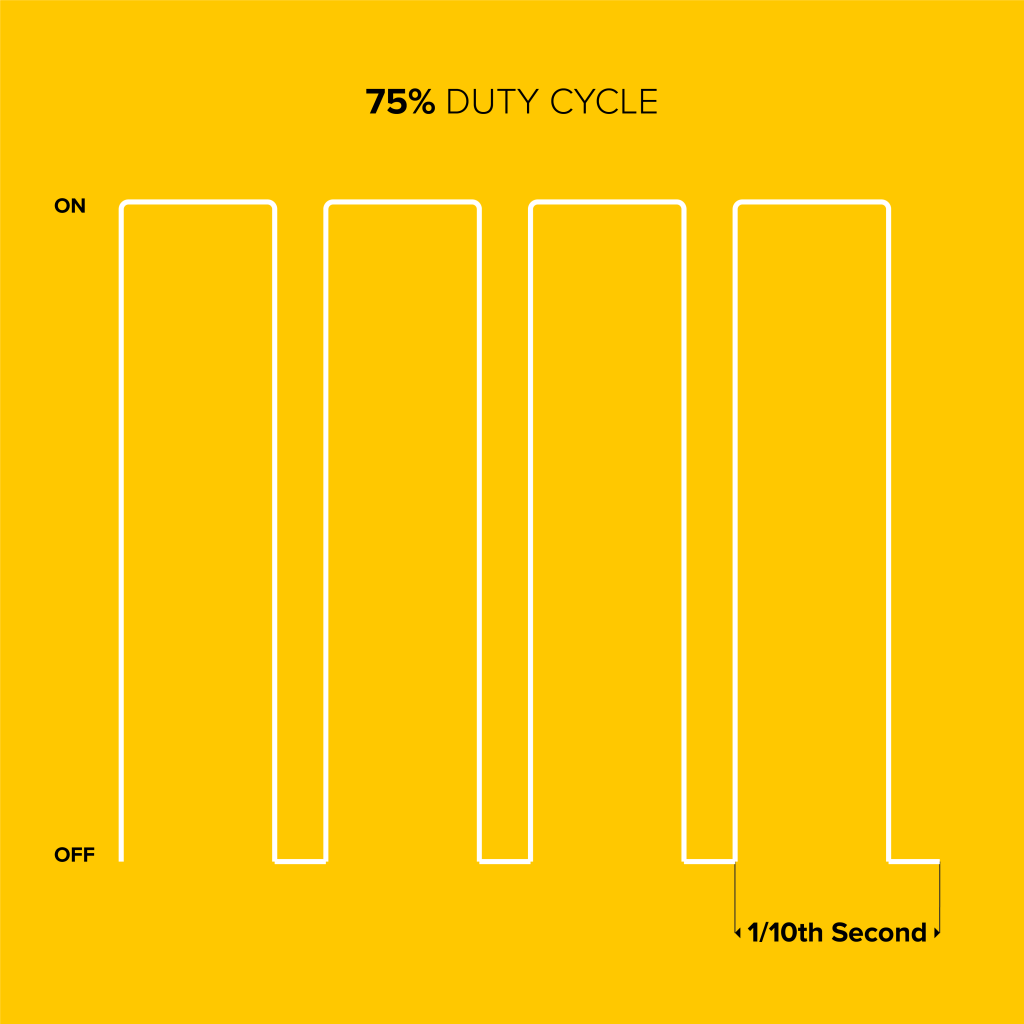
Pulse Width Modulation (PWM) offers solutions to these issues and whilst increasing spray efficacy at the same time. On a PWM system each nozzle body is fitted with an electric solenoid that pulses the spray on and off multiple times a second, this can be anywhere between 10-40Hz (pulses per second). Rate changes are achieved by varying the duration the nozzle is in the “on” position or “duty cycle”. This duty cycle is changed in relation to changes in forward speed, allowing instant rate control at each spray nozzle, with the pressure being fixed at all times to give a consistent droplet size across the whole field.

Features such as turn compensation, individual nozzle control and the ability to change the droplet size from the drivers seat, offer Chafer customers the opportunity to maximise application efficacy like never before.

PWM: What does it offer growers?

The Facts: How does PWM work?
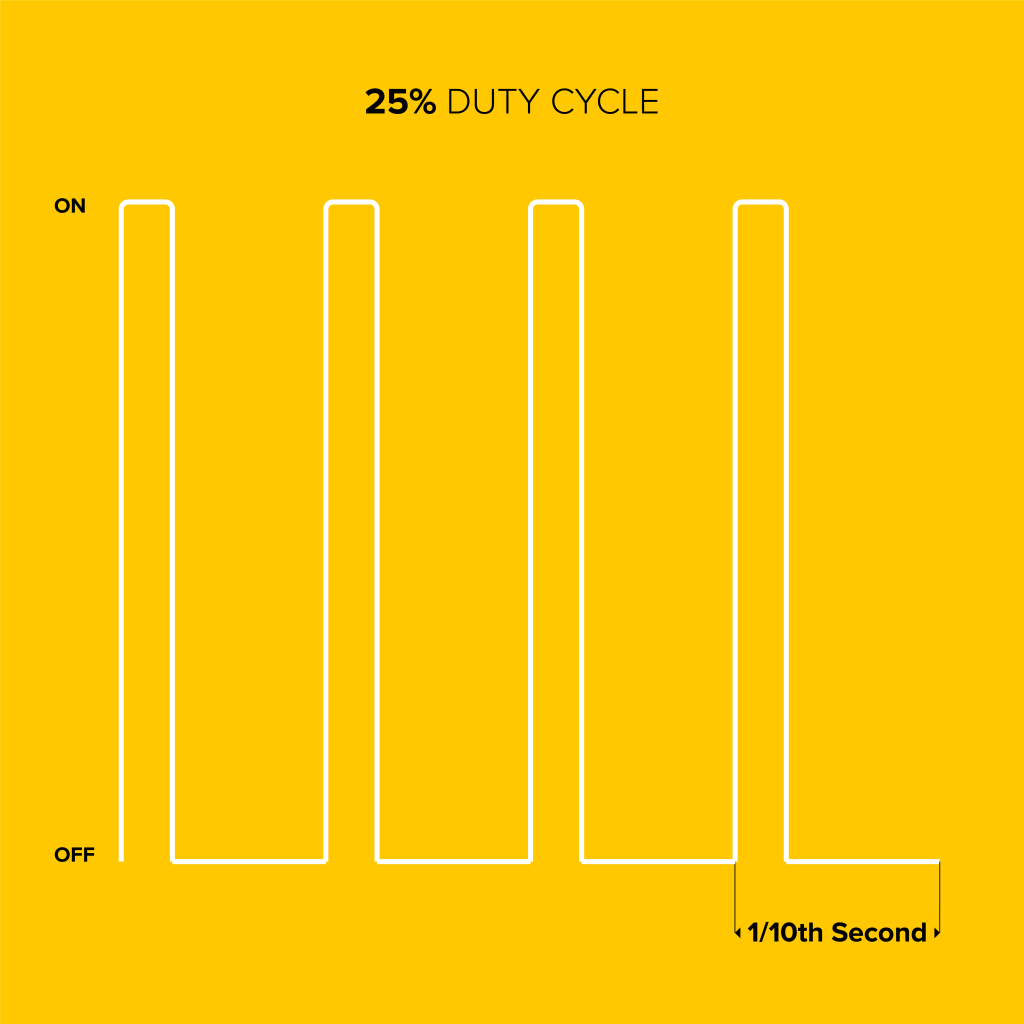
25% Duty Cycle75% Duty Cycle

The Facts: How does PWM work?

A pulsing solenoid creates short durations of low pressure inside the nozzle body, and this can result in poor performance of some air induction nozzles. As a result, the PWM manufacturers have recommended that pre-orifice nozzles be used instead.

It’s worth noting that some PWM users have used air induction nozzles successfully, with variance between different models noted. Some air-induced nozzles blow spray liquid out the air-induction intakes once a pulse is applied, so this must be checked at a range of duty cycles and rates.

Due to the unique way the PWM system works, users will be specifying a slightly larger nozzle than they currently use to achieve the 70% duty cycle. The best place to start is let us know what nozzle you currently use and at what pressure, that way we can specify an equivalent to gives the correct droplet sizing.

A PWM system can be used with liquid fertiliser, either by setting the duty cycle to 100%, or by running a higher duty cycle. Low duty cycles can create cavitation so these are best avoided.

Chafer are currently looking into Streambar compatibility to provide guidelines for the setup on the Raven Hawkeye System.

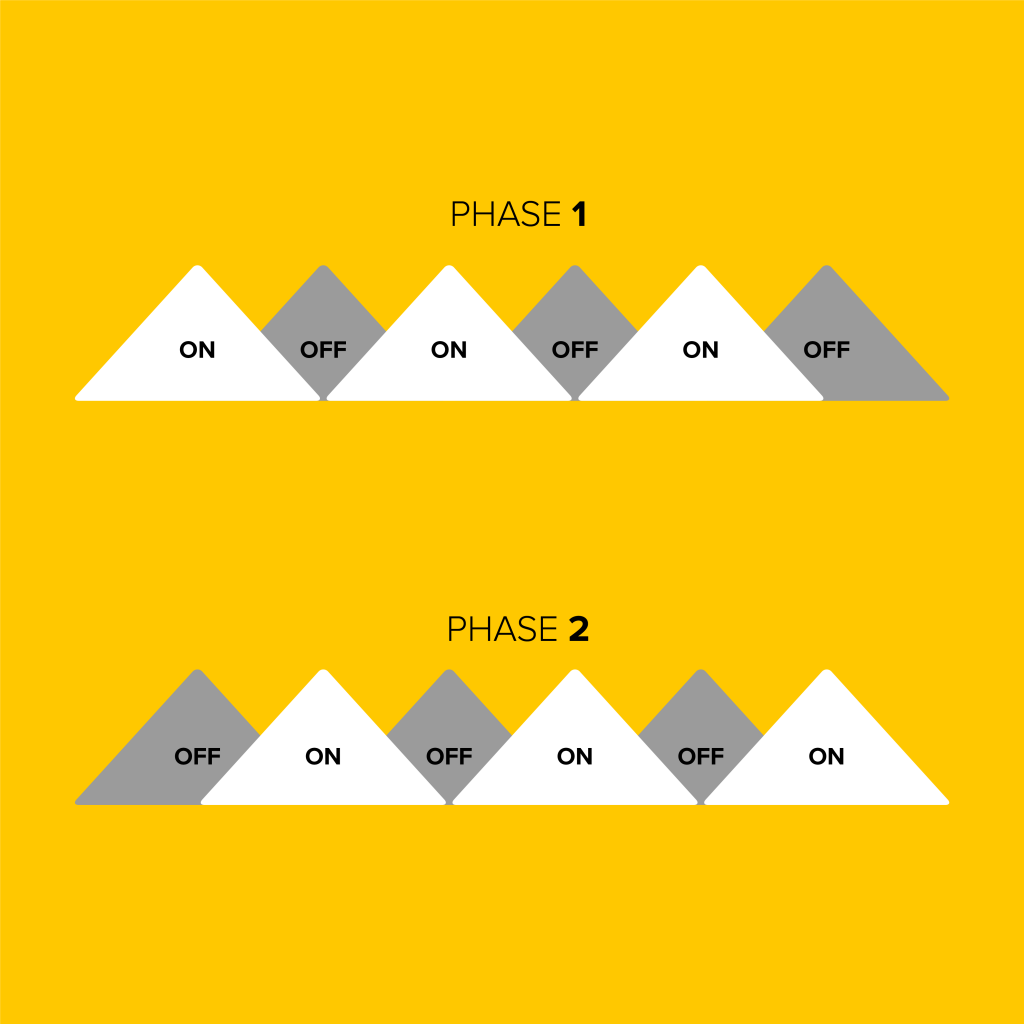
Some manufacturers of Pulse Width Modulation systems advertise that a higher frequency is preferable. The Hawkeye system generally operates anywhere between 10-40Hz, with the two phase pulsing creating a quasi 20-80Hz range, but in general we advise the system be run at the standard 10Hz. This maximises service intervals and as long as the nozzle is sized correctly removes the changes of misses being created.

The other issue with a higher frequency is a reducing in the effective duty cycle range. If a nozzle body is operating at 100Hz, most of the time is taken up by physically moving the poppet from its open to closed position and back. This reduces the time available to actually vary the rate, resulting in poorer performance during turn compensation and a reduced speed range. A bigger number isn’t always better!

Like all spray systems Raven Hawkeye likes a properly filtered liquid, so keep an eye on filters and ensure they are properly sized and clean. The only wearing part on the system is the stainless steel poppet in the NCV, with the rubber seal on the end wearing over time. Users may experience dripping from nozzles when this part is beginning to wear, but users have extended service intervals well beyond 2500hrs before having to swap any poppets.

For more information on the Raven Hawkeye PWM system please get in touch.